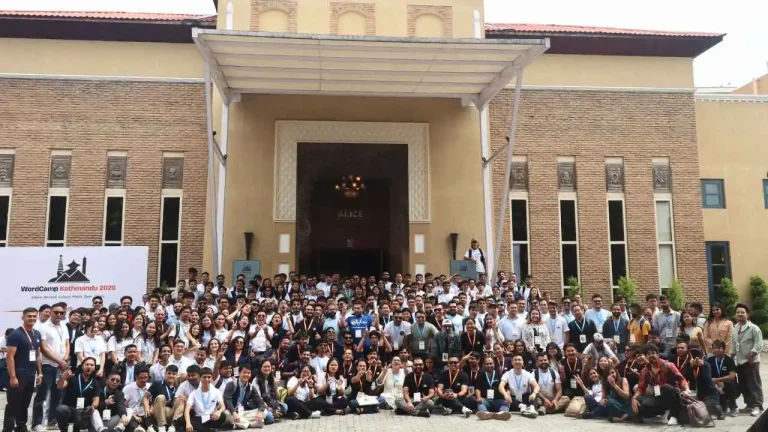
What USYC 2026 Taught Me About Communication and Leadership
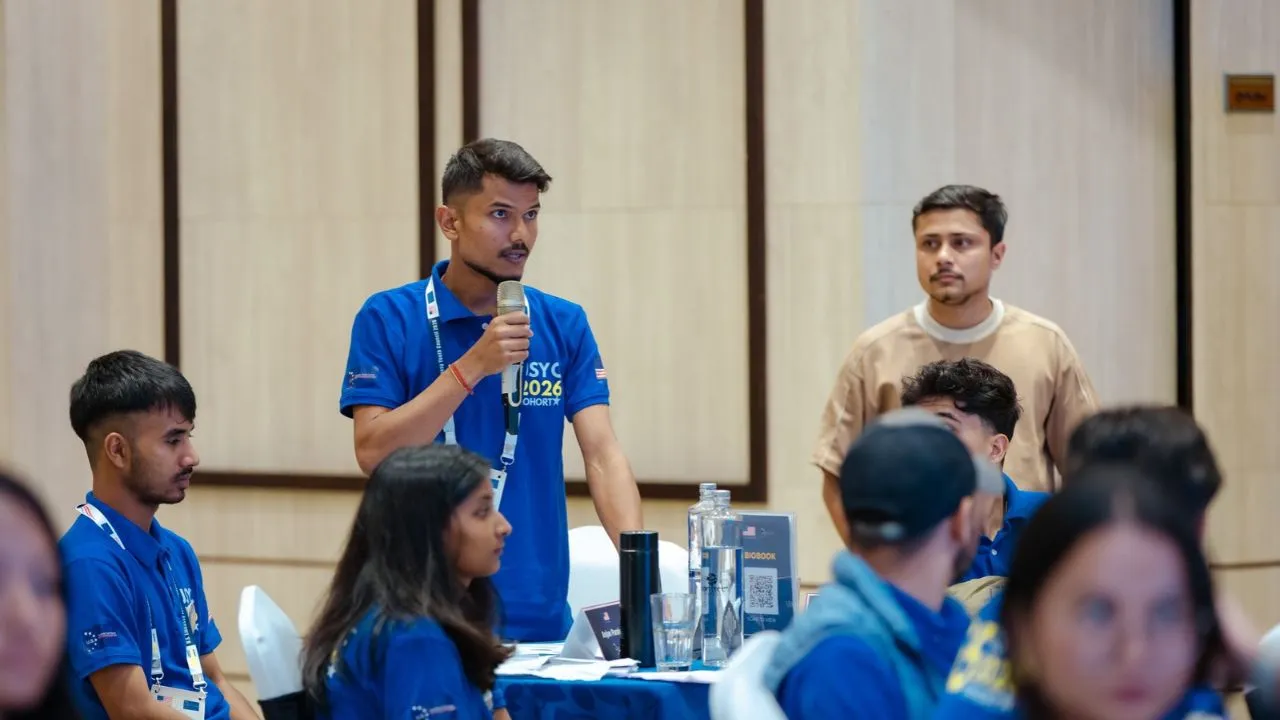
Communication becomes especially important when an idea needs to move beyond the person who created it.
You may have a strong idea, useful knowledge, the right technology, or even a meaningful initiative. But if people cannot understand it, trust it, connect with it, and see what they should do next, much of its potential impact can remain unrealized.
That was one of the ideas I kept returning to during the USYC 2026 Business Communication Workshop, the second Career Accelerator Workshop for the U.S. Embassy Youth Council 2026 cohort. The workshop was part of the broader USYC 2026 initiative, which brings together young people from different parts of Nepal through leadership, learning, and civic engagement opportunities.
Held over two days in Kathmandu, the workshop went far beyond learning how to “speak confidently.” We explored professional communication, difficult conversations, active listening, presentation strategy, storytelling, persuasion, networking, responsible use of AI, professional presence, and communicating under pressure.
For me, many of these ideas connected directly with the work I already do as an AI educator, trainer, applied AI researcher, and someone interested in helping young people and organizations make better use of emerging technology.
Communication Is More Than Speaking Well
One of the first things the workshop reinforced was that professional communication is not simply about vocabulary, fluency, or confidence.
It begins much earlier: Who am I communicating with? What do they already know? What do they need from this conversation? What is the right tone? Which channel is appropriate? And, perhaps most importantly, what should happen after the communication?
During the sessions facilitated by Shaurab Lohani, we examined communication through practical professional situations rather than treating it only as theory.
One activity around difficult conversations particularly stayed with me. Our group had to examine a situation where a team leader needed to address a missed commitment without turning the conversation into a personal attack.
Respect the person. Address the behaviour. Protect the standard.
That distinction matters in leadership.
Being empathetic does not mean avoiding accountability. At the same time, holding someone accountable does not require embarrassing, attacking, or immediately blaming them.
Sometimes the most professional response begins with slowing down, understanding the situation, separating assumptions from facts, and then responding with clarity.
Professional Communication in the Age of AI
The workshop also included a session on AI-native professional communication facilitated by Chandan Goopta.
Many of the AI concepts and tools discussed were already familiar to me because of my work in AI training in Nepal. What made the session valuable was the opportunity to apply those capabilities specifically to professional communication.
We worked with practical situations involving drafting, rewriting, improving tone, providing context, reviewing communication, and using tools such as ChatGPT more intentionally.
AI can support communication, but it cannot take responsibility for our communication.
A polished AI-generated email can still be inappropriate if the context is wrong. A grammatically perfect response can still damage a relationship if it lacks empathy. And a professional-looking message can still create problems if confidential information is shared with an AI tool without considering privacy and responsibility.
This becomes particularly important as AI adoption in Nepal continues to grow across businesses, educational institutions, professional teams, and other organizations.
AI adoption is not only about giving people access to technology. People need to understand why a tool is being introduced, how it changes their work, where it should and should not be used, what risks exist, and where human judgment remains essential.
That is why I increasingly see communication, AI literacy, capacity building, organizational readiness, and change management as closely connected parts of responsible technology adoption.
This perspective also shapes how I approach corporate AI training in Nepal, where learning how to use a tool is only one part of a much larger adoption process.
A Presentation Is Not About Showing Everything You Know
Another session that stood out to me was Abhisekh Maskey’s session on presentation strategy, structure, story, audience, and presentation design.
I particularly enjoyed the way questions were left with the audience instead of simply giving us another list of presentation rules.
It made me reflect on something I experience regularly as an educator: sometimes knowing more about a subject actually makes presenting it harder.
When we know a lot, our instinct is often to include everything. But a presentation is not an examination of how much the presenter knows.
A strong presentation is a decision about what the audience actually needs to understand and remember.
This principle is especially relevant to technical and AI education.
The way I explain an AI concept to an IT student should be different from the way I explain the same technology to an executive, finance professional, educator, entrepreneur, or someone encountering generative AI for the first time.
The technology may be the same. The communication should not be.
This audience-first approach is also central to the way I design AI training for professionals in Nepal.
Understanding What Happens When We Become Nervous
Asmita Mainali’s session on confident delivery brought another dimension to communication.
Instead of simply telling participants to “be confident,” the session explored what happens psychologically and physically when we become nervous while speaking.
We explored breathing, voice, posture, pauses, body language, and techniques such as diaphragmatic breathing. I found the science and psychology behind nervousness particularly interesting because it reframed confidence as something we can understand and practise rather than something people simply have or do not have.
We often treat nervousness as evidence that we are not ready to speak. But nervousness itself is not necessarily the problem. Understanding how our body responds, learning to regulate that response, and continuing to expose ourselves to speaking situations can gradually change how we perform under pressure.
For trainers and educators, this matters beyond our own presentations. It also affects how we create environments where learners feel comfortable asking questions, making mistakes, expressing ideas, and developing confidence over time.
Persuasion Becomes Stronger When It Comes From Real Experience
The session on persuasion, business storytelling, and handling questions was facilitated by Sojan Prajapati.
I had interacted with Sojan several times before, which made it particularly interesting to hear another side of his professional experience and how communication principles work in real business situations.
The session explored persuasion beyond simply trying to convince someone. Credibility matters. Evidence matters. Understanding what the audience values matters. And knowing when to acknowledge uncertainty matters.
One of the most useful aspects of learning from experienced professionals is hearing how principles work when they meet real-world situations.
Business communication rarely happens under perfect conditions. There are competing interests, limited information, different personalities, questions we did not anticipate, and sometimes decisions that still need to be made despite uncertainty.
That is where communication becomes less about memorizing the “right sentence” and more about developing judgment.
Learning to Communicate Under Pressure
One of the most engaging parts of the workshop came when we had to think on our feet.
During the Hot Seat activity facilitated by Shaurab Lohani, participants had to communicate an idea concisely and then respond to unexpected questions, objections, and professional pressure.
This type of exercise exposes something prepared presentations can sometimes hide.
When there are no prepared slides and no memorized script, can we still identify the main point? Can we pause before responding? Can we acknowledge something we do not know? Can we separate evidence from opinion? Can we answer the actual question instead of becoming defensive?
These are skills that matter in classrooms, meetings, interviews, client conversations, leadership roles, negotiations, and almost every professional environment.
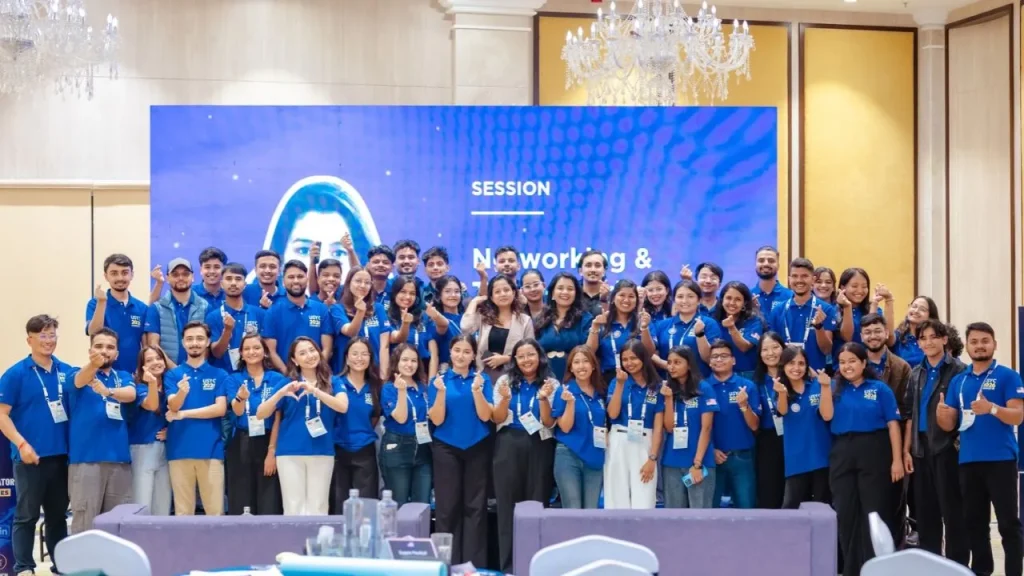
Networking Became Part of the Learning
The networking and team-building sessions brought a different energy to the workshop.
Aditi Goyal and Ruchi Pandey facilitated interactive experiences that gave Council Members room to communicate beyond formal presentations and structured discussions.
Those activities reminded me that professional relationships are not built only by exchanging contact details.
They are built by listening, being curious, understanding what another person is working on, finding shared interests, and discovering where collaboration might actually make sense.
This was also personally valuable because it was another opportunity to spend meaningful time with the USYC 2026 cohort.
During the two days, I connected more deeply with several fellow Council Members working around artificial intelligence, technology, youth development, entrepreneurship, and related areas. Some of those conversations have already opened possibilities for future collaboration.
That, for me, is one of the less visible but most valuable parts of programs like USYC: the learning does not come only from the people standing at the front of the room. It also comes from the people sitting beside us.
Communication Is Part of AI Adoption
Looking back at both days, one connection became increasingly clear to me.
Technology adoption is ultimately a human process.
An organization may purchase powerful AI tools, but people still need to trust those tools, understand their purpose, know how to use them responsibly, change existing workflows, communicate concerns, and make decisions about where human judgment remains essential.
The same applies to AI education.
Teaching people prompts, features, and tools is useful, but sustainable AI adoption requires much more. It requires AI literacy, communication, organizational readiness, leadership, responsible-use guidelines, experimentation, feedback, and the ability to translate technology into meaningful outcomes.
This is one reason my own work is increasingly focused not only on teaching AI tools, but also on helping students, professionals, educators, teams, and organizations understand how AI can fit into real work responsibly and practically.
For organizations that need a more structured approach to this transition, my work in practical AI training and corporate AI capacity building focuses on connecting technology with real workflows, productivity, responsible use, and organizational needs.
Learning, Leadership and Youth Capacity Building
The workshop also reminded me why I value opportunities that bring young people from different professional and regional backgrounds into the same room.
Youth leadership is not developed only through titles or formal positions. It develops when young people learn how to communicate ideas, listen to perspectives different from their own, collaborate across disciplines, take responsibility, handle disagreement, and turn learning into action.
Programs supported by organizations such as U.S. Embassy Nepal can create valuable spaces for those exchanges by connecting professional development with public engagement, leadership, and practical learning.
This also connects with my own long-term interest in helping young people in Nepal strengthen their AI literacy, professional readiness, digital capabilities, and ability to participate meaningfully in a rapidly changing technology landscape.
From Learning to a 30-Day Commitment
The workshop did not end with another presentation.
We were asked to think about what we would actually change over the next 30 days and put those commitments on paper.
I liked that approach because professional development becomes meaningful only when learning changes behaviour.
For me, that means continuing to improve how I structure ideas, listening more intentionally, becoming more comfortable with pauses, communicating difficult points directly but respectfully, and adapting my communication more deliberately to the person or group in front of me.
These are also skills I want to carry into my work with young people, professionals, organizations, and learners.
As someone interested in AI literacy, youth capacity building, and practical technology adoption in Nepal, I do not want learning opportunities like this to stop with me.
The larger opportunity is to translate what I learn into better workshops, stronger collaborations, clearer communication, more responsible AI adoption, and more opportunities for young people to become confident participants in Nepal’s changing digital economy.
My Biggest Takeaway from the USYC 2026 Business Communication Workshop
If I had to summarize the two days in one idea, it would be this:
Good communication is not about sounding impressive. It is about creating enough clarity and trust for people to understand, respond, collaborate, decide, or act.
That applies when giving feedback. It applies when presenting an idea. It applies when handling disagreement. It applies when building professional relationships.
And increasingly, it also applies to how we introduce and scale artificial intelligence.
AI may transform how we work, but people still need to communicate, collaborate, build trust, exercise judgment, and lead change.
That is why I see communication as an increasingly important part of my journey as an AI educator, applied AI researcher, and corporate AI trainer in Nepal.
Grateful for the Experience
I am grateful to U.S. Embassy Nepal and Youth Innovation Lab Consult for creating another practical learning experience for the USYC 2026 cohort.
Thank you to Shaurab Lohani, Aditi Goyal, Chandan Goopta, Abhisekh Maskey, Asmita Mainali, Sojan Prajapati, and Ruchi Pandey for bringing different perspectives, professional experiences, and facilitation styles into the two-day workshop.
And equally, thank you to my fellow USYC 2026 Council Members. The conversations outside the formal sessions, new connections, shared interests, and possibilities for collaboration made the experience even more valuable.
I joined the workshop expecting to learn more about business communication.
I left thinking more deeply about something broader:
Creating impact matters. But learning how to communicate that impact so others can understand it, trust it, and participate in it matters just as much.