Gen AI for Learning and Growth: A Practical AI Session with B.Sc. IT Students at LBEF College
Artificial intelligence is becoming increasingly accessible to students. The bigger challenge now is no longer simply knowing that tools such as ChatGPT or Gemini exist.
The real challenge is understanding how to use AI effectively, when to use a particular tool, how to communicate with it clearly, and how to maintain human judgment while working with AI-generated information.
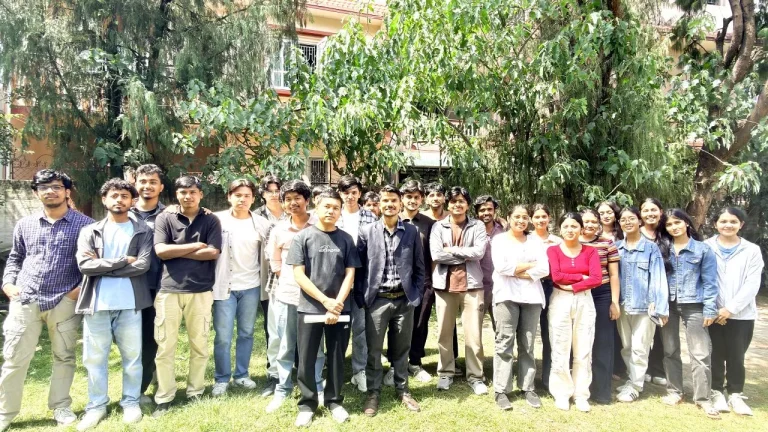
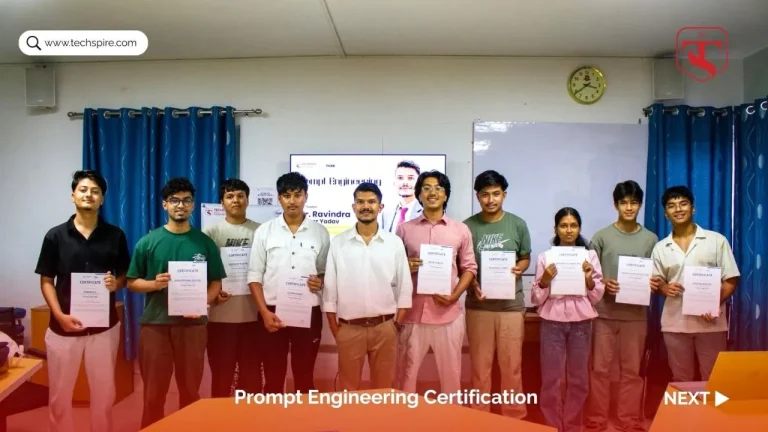
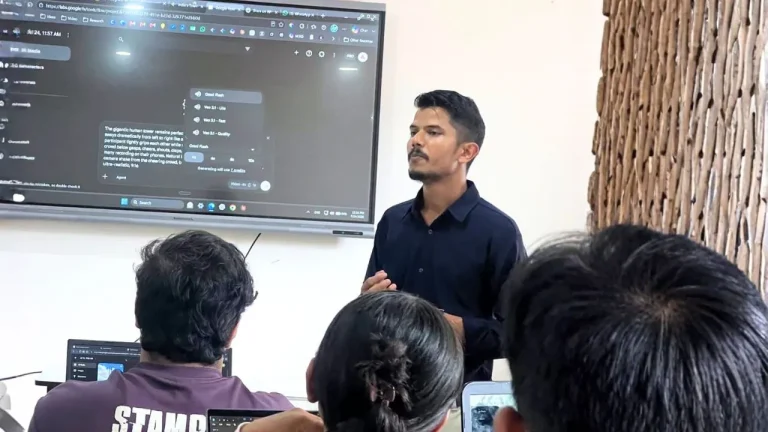
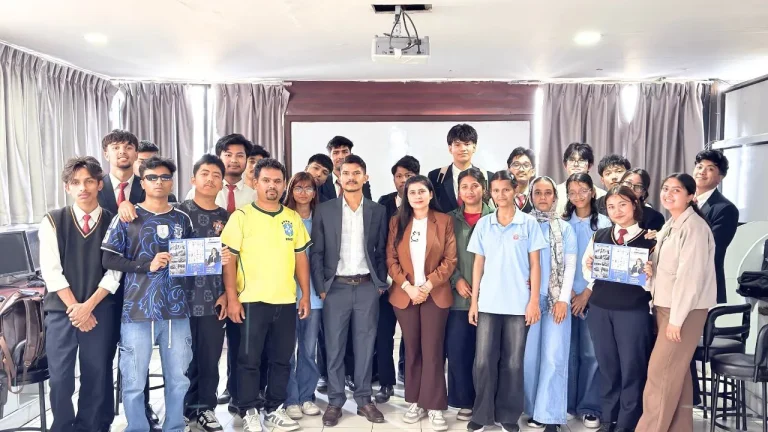
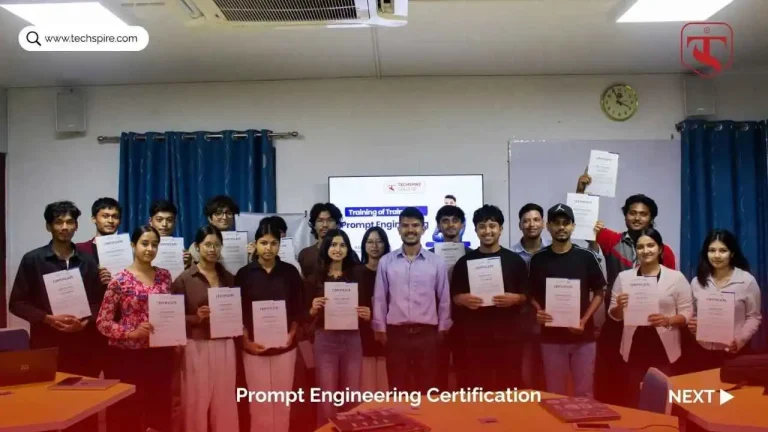
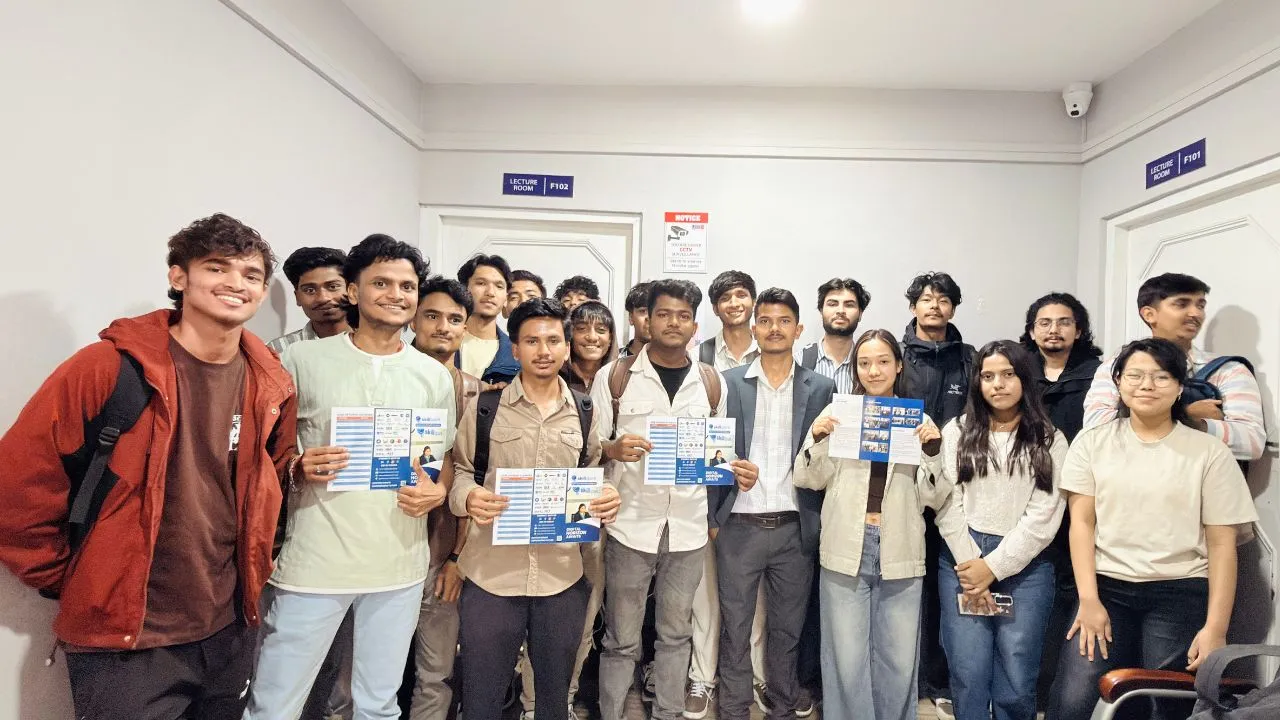
That was the central focus of my recent AI for Learning and Growth session with BCA students at LBEF College, Lord Buddha Education Foundation, Kathmandu.
What stood out to me from the beginning was the students’ curiosity.
I initially wanted to understand how familiar they already were with artificial intelligence before moving into the main content. Through interaction with the students, it became clear that many of them already had a basic understanding of AI and had experimented with different AI tools.
That changed the direction of the session in a positive way.
Instead of treating AI as an entirely new concept, I could focus more on helping students move from simply using AI tools toward understanding how to work with AI more intentionally.
Starting with Prompt Engineering in Simple Language
One of the first areas I introduced was prompt engineering.
The term can sometimes sound more technical than it needs to be, especially for students who are still exploring generative AI.
Rather than beginning with complicated frameworks or technical terminology, I explained the underlying idea in practical language.
When we interact with an AI system, the quality of the instruction, context, information, constraints, and expected output can significantly influence the response we receive.
Students therefore need to understand that prompting is not simply about typing a question.
It is about learning how to communicate a task clearly.
Through interactive activities during the session, students explored how changing the way a request is structured can change the quality and usefulness of an AI-generated response.
The objective was not to make students memorize a single “perfect prompt.”
It was to help them develop the ability to think about:
- What am I trying to achieve?
- What information does the AI need?
- What context should I provide?
- What kind of output do I expect?
- How should I evaluate the response afterward?
This shift from random prompting to intentional interaction is an important part of practical AI literacy.
Understanding Which AI Tool to Use for Which Task
Another major part of the session focused on a question that is becoming increasingly important:
Which AI tool should I use for a particular task?
Students today are surrounded by a growing number of AI platforms. Simply knowing the names of different tools does not necessarily make someone AI fluent.
During the session, I introduced and discussed several major AI platforms, including:
ChatGPT, Gemini, Claude, Grok, Perplexity, and MiniMax.
Rather than presenting one platform as the “best AI tool,” I focused on something more useful.
Different tools can be valuable for different objectives, workflows, and types of output.
The students explored the importance of choosing AI based on the purpose of the task, rather than repeatedly using one platform for everything.
This is one principle I strongly emphasize in practical AI education:
AI fluency is not about knowing the largest number of tools. It is about understanding which capability is useful for the problem in front of you.
The goal was therefore not to give students another long list of AI websites.
It was to help them develop a decision-making mindset around AI tools.
Moving Beyond Basic AI-Generated Presentations
Presentation creation was another important part of the workshop.
Today, several AI tools can generate a presentation within minutes.
But generating slides quickly and creating a high-quality presentation are two very different things.
I wanted the students to understand this distinction.
A presentation should not be considered finished simply because an AI system has generated ten slides.
We explored how AI can support the presentation creation process while still requiring attention to important elements such as:
Content structure
A strong presentation needs a logical sequence. Information should guide the audience from one idea to another rather than appearing as disconnected AI-generated text.
Visual hierarchy
Not every sentence deserves the same visual importance. Titles, supporting information, data, visuals, and key messages need clear hierarchy.
Brand consistency
Whether a presentation is being created for a company, project, college, startup, or professional purpose, consistency matters.
Colors, typography, visual elements, layouts, and overall design should feel connected rather than changing randomly from slide to slide.
Quality of visuals
AI makes generating visual content easier, but visual quality still requires judgment.
Students need to think about whether a visual actually supports the message rather than inserting images simply because they look impressive.
Human review
AI can accelerate the process, but the final responsibility for the accuracy, relevance, design, and communication of the presentation remains with the person creating it.
The objective was to move students from:
“AI can create my presentation.”
toward:
“AI can help me create a better presentation when I know how to direct, evaluate, and refine the output.”
That distinction is important far beyond presentations.
It applies to almost every AI-assisted workflow.
AI Should Support Learning, Not Replace Thinking
Another important discussion during the session was the ethical and responsible use of artificial intelligence.
For students in particular, AI creates both opportunities and risks.
AI can help explain difficult concepts, support research, generate ideas, improve communication, organize information, assist with presentations, and make many learning activities more efficient.
But convenience can easily become dependency.
Students therefore need to develop the habit of questioning AI-generated information rather than automatically accepting it.
Responsible AI use includes understanding when information needs to be verified, maintaining academic integrity, thinking critically about generated content, and recognizing that an AI response should not automatically replace personal analysis.
My emphasis was simple:
Use AI to strengthen your ability to learn and create, not to remove yourself from the learning process.
The long-term advantage will not belong to students who simply know how to generate content quickly.
It will belong to students who can combine AI capabilities with critical thinking, creativity, domain knowledge, communication, and human judgment.
What Stood Out About the Students
One of the most encouraging parts of the session was the level of participation from the students.
Their learning enthusiasm was clearly visible throughout the interaction.
They were not only interested in seeing what different AI tools could generate. They were interested in understanding how the tools worked in practical situations and how they could apply them to their own learning.
For me as an AI educator, this matters.
A workshop becomes much more valuable when students move beyond passive listening and begin questioning, experimenting, comparing, and forming their own understanding.
The existing level of AI awareness among the students was also noticeable.
It reinforced something I increasingly observe while conducting AI sessions:
Students are already using AI.
Our responsibility as educators, trainers, institutions, and professionals is therefore changing.
The question is no longer:
“Should students use AI?”
A more useful question is:
“How can we help students use AI responsibly, intelligently, and productively?”
A Supportive Learning Environment
The faculty members were approachable and supportive throughout the session, which contributed to a comfortable environment for interaction and learning.
After completing the workshop, I also had the opportunity to speak with members of the management team and gather feedback about the session.
The feedback was highly encouraging.
For me, collecting feedback after a training session is an important part of the process. It provides an opportunity to understand what worked well, what created value for participants, and how future sessions can be improved further.
AI itself is evolving rapidly.
AI education must evolve with it.
That means continuously learning from the people in the room rather than assuming that one workshop format will remain effective for every audience.
Building Practical AI Fluency Among Students
The session at LBEF College reinforced my belief that AI education for students should go beyond tool demonstrations.
Students need practical AI fluency.
That includes understanding:
- how generative AI works at a practical level
- how to communicate effectively with AI systems
- how to select the right AI capability for a particular task
- how to evaluate AI-generated information
- how to use AI for learning and productivity
- how to create higher-quality professional outputs
- how to maintain ethical and responsible AI practices
- how to combine AI with their own knowledge and judgment
AI tools will continue changing.
Some of the platforms students use today may look very different a few years from now.
That is why teaching only individual tools is not enough.
The more valuable skill is developing the ability to understand, evaluate, adapt to, and work effectively with emerging AI capabilities.
Looking Ahead
Sessions like this are also a learning experience for me.
Every classroom has a different level of awareness, curiosity, and expectation. Interacting directly with students helps me better understand how young learners are approaching AI and where practical guidance can create the most value.
I appreciate LBEF College and its team for creating the space for this interaction and the BCA students for bringing such strong curiosity and participation to the session.
As artificial intelligence becomes part of education and professional life, building AI literacy cannot be limited to learning how to operate a few tools.
Students need to learn how to think with AI, question AI, create with AI, and use AI responsibly.
That is the kind of practical AI capability I hope to continue building through my work with students, educators, professionals, and organizations.