Advanced Prompt Engineering and AI Productivity 3.0 at Techspire College
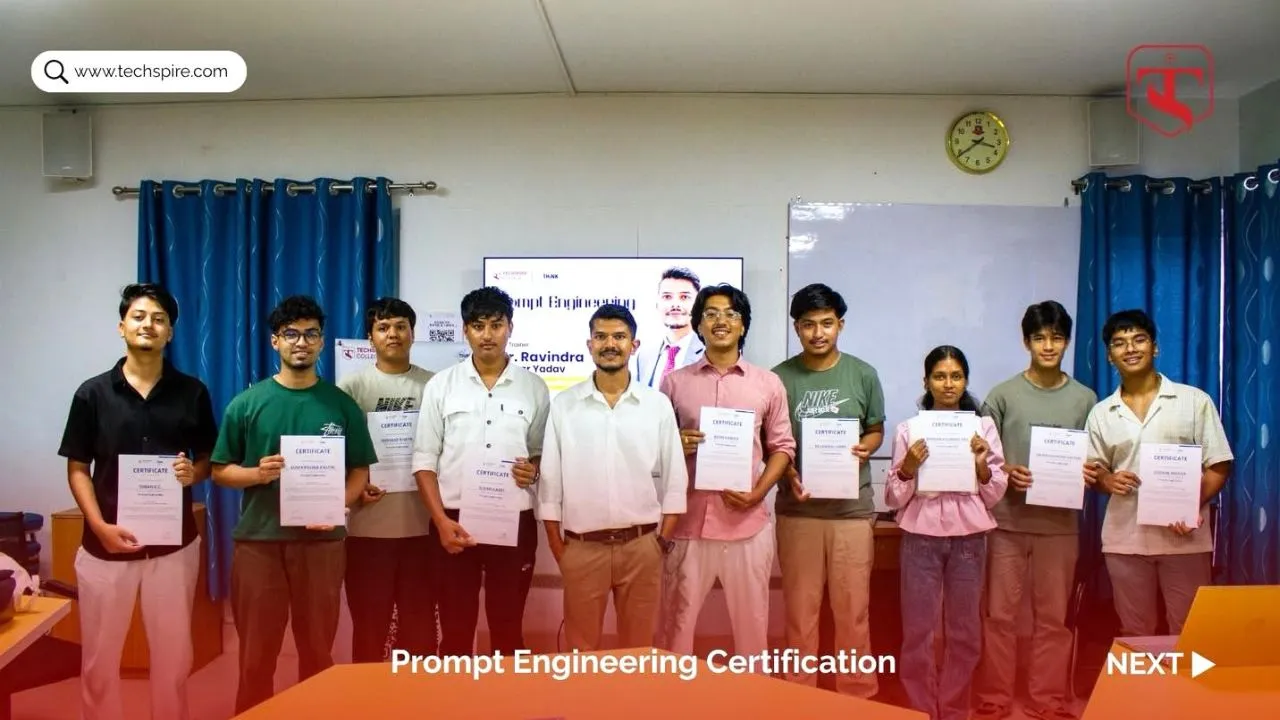
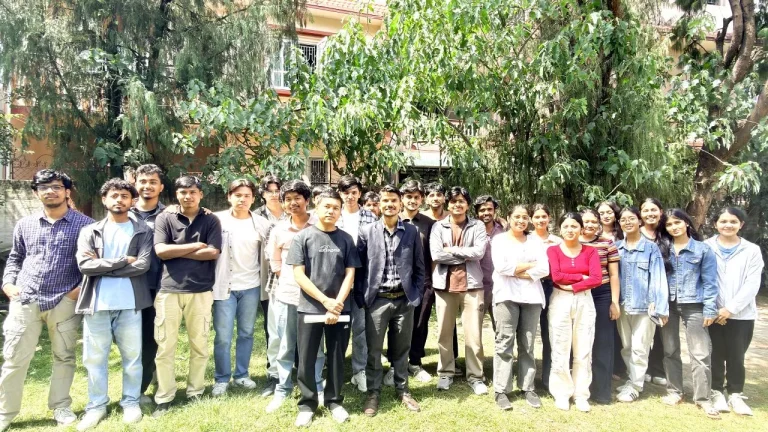
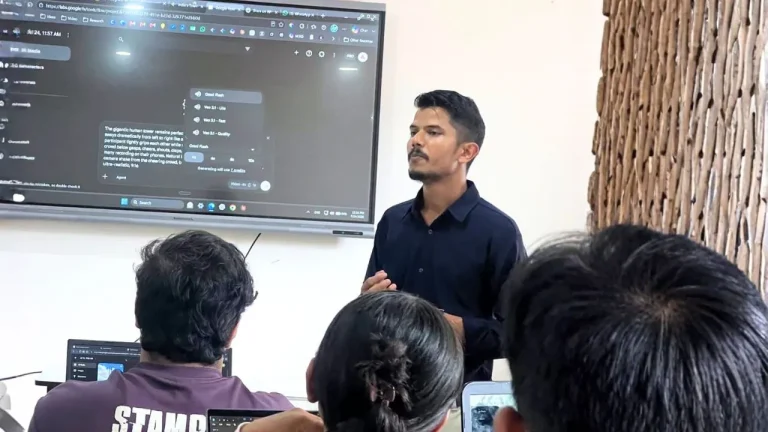
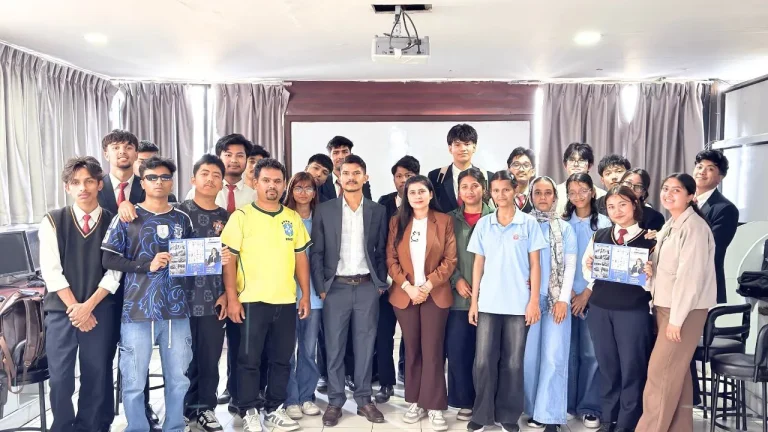
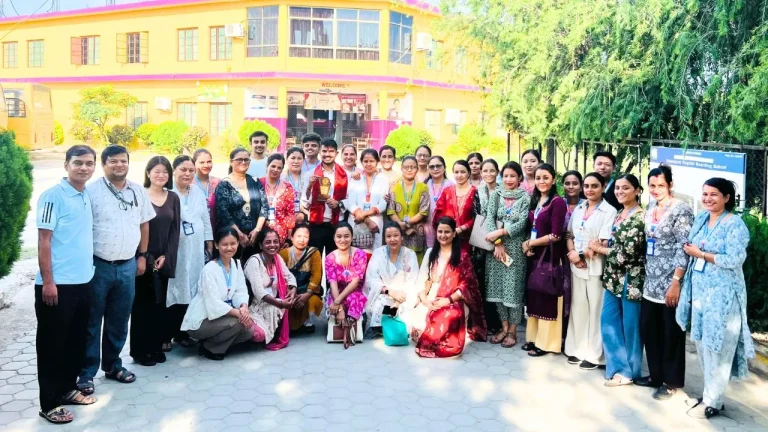
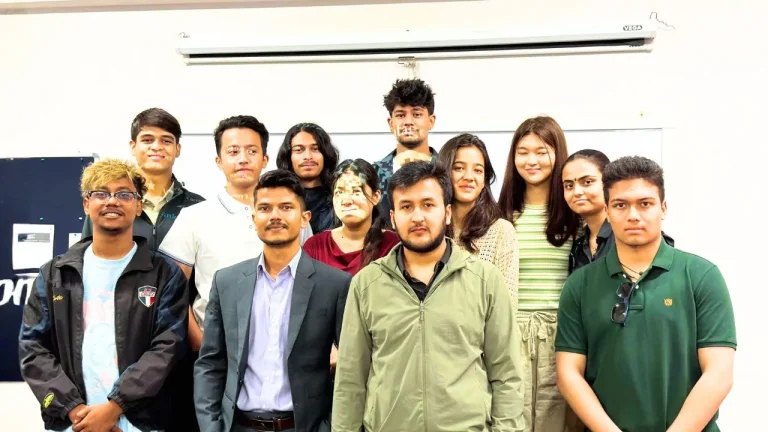
In late August 2026, I returned to Techspire College in New Baneshwor, Kathmandu, to facilitate another two-day program with around 20 BSc (Hons) IT students: Advanced Prompt Engineering and AI Productivity 3.0.
Returning to the college only about a month after the previous session made this program particularly interesting.
The earlier Advanced Prompt Engineering and AI Productivity 2.0 workshop had received a strong response from participants. Students discussed the experience with their friends, and another group wanted the opportunity to explore the same area in greater depth.
But in Artificial Intelligence, even a short gap can matter. Tools change, capabilities expand and the way we think about productive AI use continues to evolve.
So rather than simply repeat the previous program, I treated 3.0 as an updated version of the learning experience.
AI Education Cannot Be a Static Syllabus
One challenge in teaching Generative AI is that a workshop can become outdated quickly if it is built entirely around buttons, menus and individual product features.
That is why I increasingly think about AI education in terms of capabilities and workflows.
Students need to understand how to give an AI system useful context, break down a task, compare different approaches, refine an output and decide when the result is good enough to use. They also need to recognize when an AI tool is not the appropriate solution.
During the 3.0 program, we continued working with advanced prompting and practical AI productivity while also exploring updated capabilities that had become increasingly relevant to modern AI workflows.
I intentionally do not treat every new feature as a separate skill to memorize. Instead, students explored what newer capabilities make possible and how those capabilities can fit into broader study, development, research and productivity workflows.
From Better Prompts to Better AI Workflows
Prompt engineering remained an important part of the program, but the conversation went beyond writing a better individual prompt.
Students worked through practical tasks and looked at how multiple steps can connect together: understanding the objective, giving appropriate context, generating an initial result, evaluating it and improving the output through iteration.
We also compared how different AI systems approached similar tasks. This helped reinforce an important point: there is rarely one universally “best” AI tool.
The better question is often: Which capability is most appropriate for this particular task?
This way of thinking becomes increasingly important as students enter a job market where AI platforms, development tools and automation systems will continue changing throughout their careers.
Responsible AI Became a Bigger Part of 3.0
One of the areas I emphasized more strongly in the second edition was the ethical and responsible use of AI.
As AI tools become more capable, responsible use cannot remain a short disclaimer at the end of a workshop. It needs to become part of the workflow itself.
Students need to think about the reliability of generated information, appropriate use of data, originality, academic responsibility, human review and the consequences of using an AI-generated result without understanding it.
This is particularly important for IT students. AI can accelerate development, research and problem-solving, but greater capability also increases the importance of understanding what the system has produced.
Being able to generate code, content or analysis quickly is useful. Being able to evaluate whether that output is correct, appropriate and safe is a more durable professional skill.
Teaching for Adaptability, Not Tool Dependency
The period between the 2.0 and 3.0 programs reinforced something I have been thinking about increasingly in my own work around applied AI and AI adoption.
If AI education is built entirely around today’s interface, today’s model or today’s feature list, students may learn something useful for a few months but still be poorly prepared for what comes next.
The long-term skill is not knowing every AI feature. It is being able to understand a new capability, evaluate where it fits, use it responsibly and integrate it into a useful workflow.
This is why I see AI fluency as closely connected to adaptability.
A student who understands only one AI product may struggle when that product changes. A student who understands the underlying process of defining a problem, selecting a capability, providing context, testing outputs and making improvements has a much stronger foundation.
This principle also shapes how I approach practical AI training in Nepal and my broader work around AI adoption.
From Classroom Productivity to Future Opportunities
For students, AI productivity should not be understood only as completing assignments faster.
Used thoughtfully, AI can help students research an idea, organize information, explore a market, prototype a project, learn a technical concept, improve communication and test possible solutions.
During both Techspire programs, I was encouraged by the willingness of students to explore beyond the immediate classroom task. Their interests ranged from development and automation to content, marketing and potential business ideas.
For me, this is where AI education becomes most interesting. The objective is not to make every student use the same tool in the same way. It is to help them connect AI capabilities with their own interests, technical skills and problems they may want to solve.
What Changed From 2.0 to 3.0?
The foundation of both programs remained similar: advanced prompt engineering, practical AI productivity and active learning.
- 2.0 focused strongly on developing better prompting habits, comparing tools and applying AI across different student interests.
- 3.0 retained that foundation while incorporating newer AI capabilities, more current workflows and a stronger emphasis on responsible AI use.
The difference may sound small, but it reflects a larger reality about this field: AI learning needs continuous revision.
A curriculum cannot simply be created once and reused indefinitely. The fundamental thinking can remain, but examples, capabilities, workflows and discussions need to evolve with the technology.
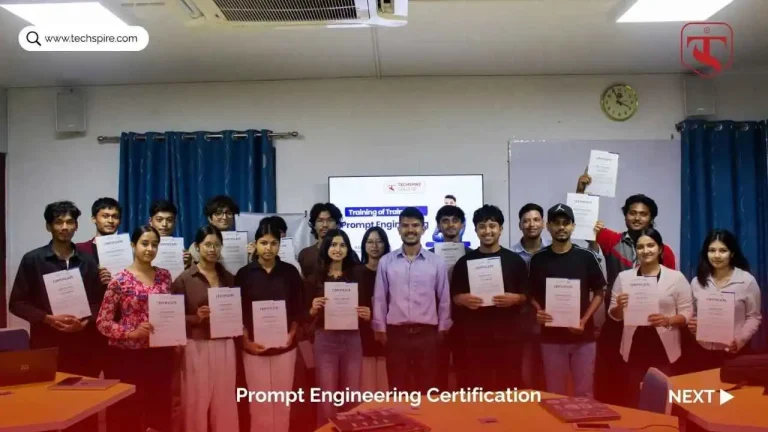
A group and certification photo from the 3.0 program was also shared on Facebook.
Preparing Students for an AI-Enabled Future of Work
Programs like these also connect with a broader question I continue to explore through my work: what does it actually mean to prepare students and professionals for an AI-enabled future of work?
I do not think the answer is simply “learn ChatGPT.”
It requires practical AI fluency, critical thinking, responsible use, the ability to work across tools and the confidence to continue learning as capabilities change.
That is also why my work increasingly connects AI education with practical AI adoption. Whether the audience is a student or a business team, the underlying challenge is similar: understand what AI can do, identify where it genuinely fits and retain human judgment throughout the process.
If you are exploring practical AI learning for a college, professional group or organization, you can explore my AI training and workshop work, review my training and consulting services, or learn more about my work in applied AI education and adoption.